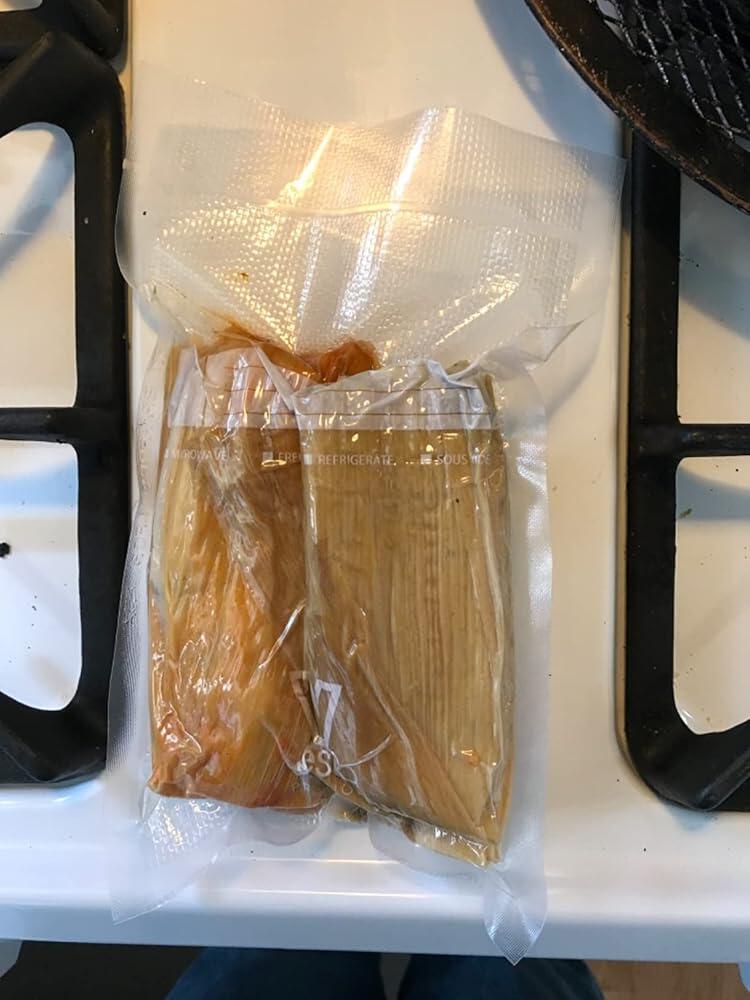
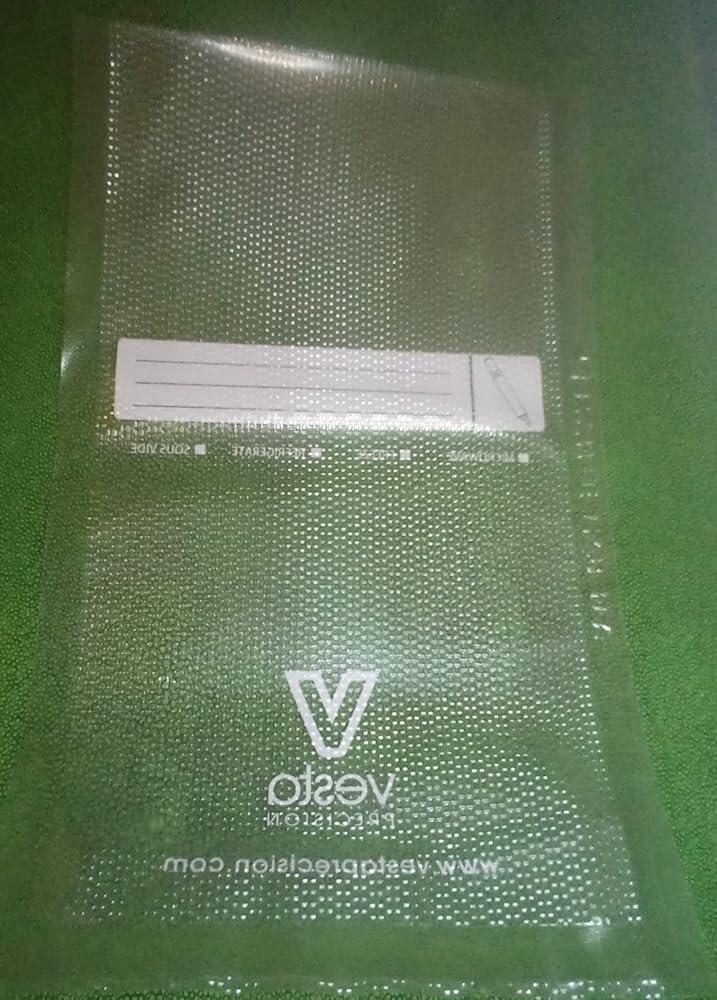
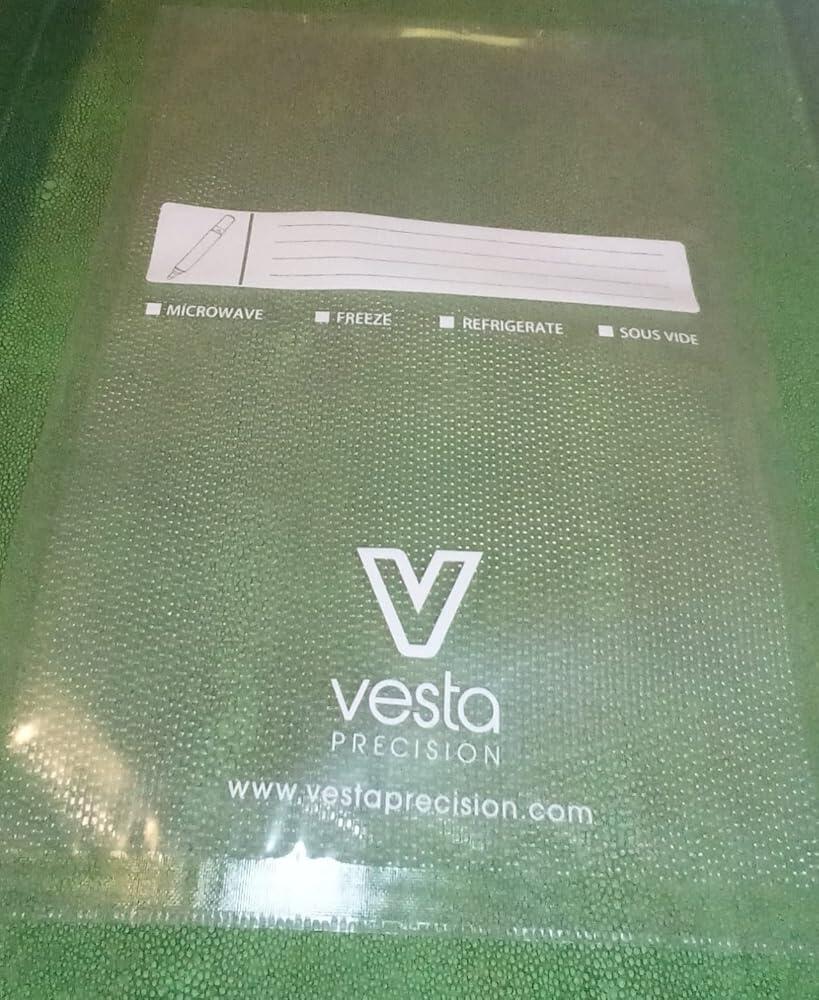
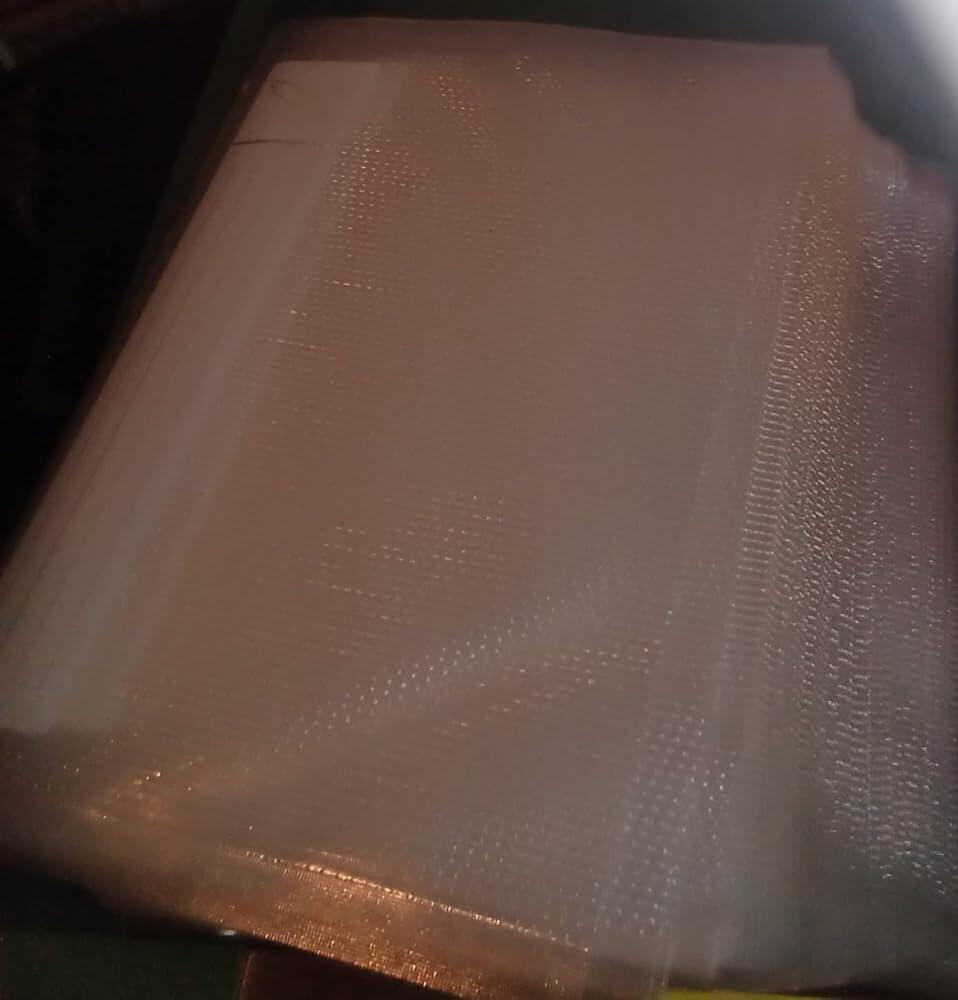
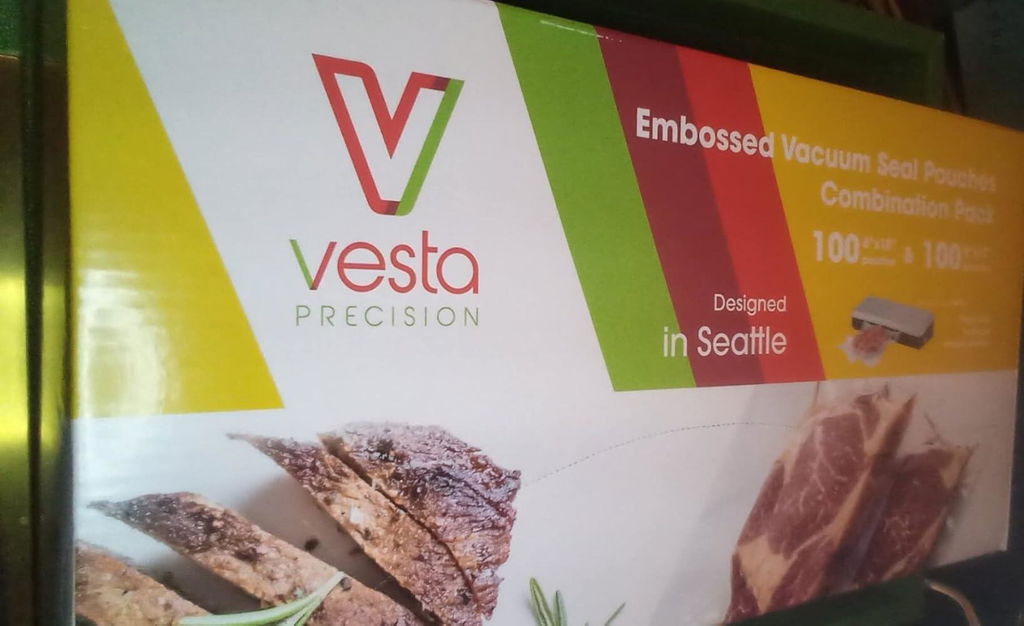
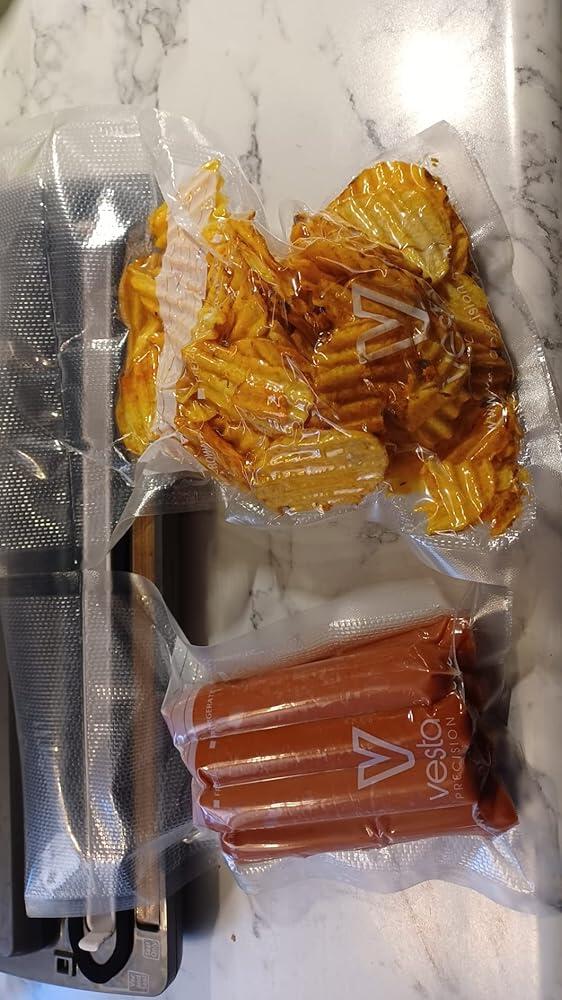
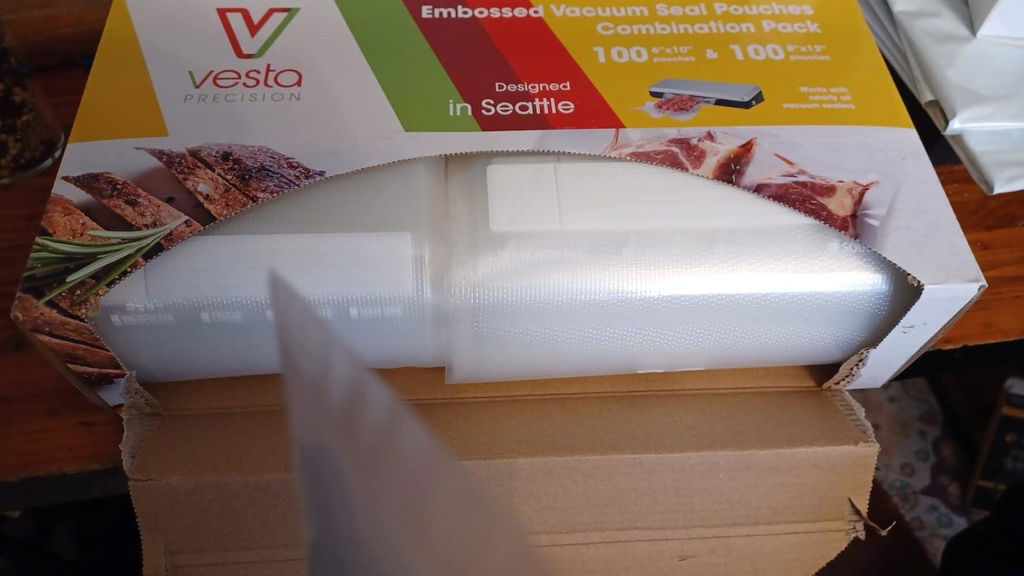
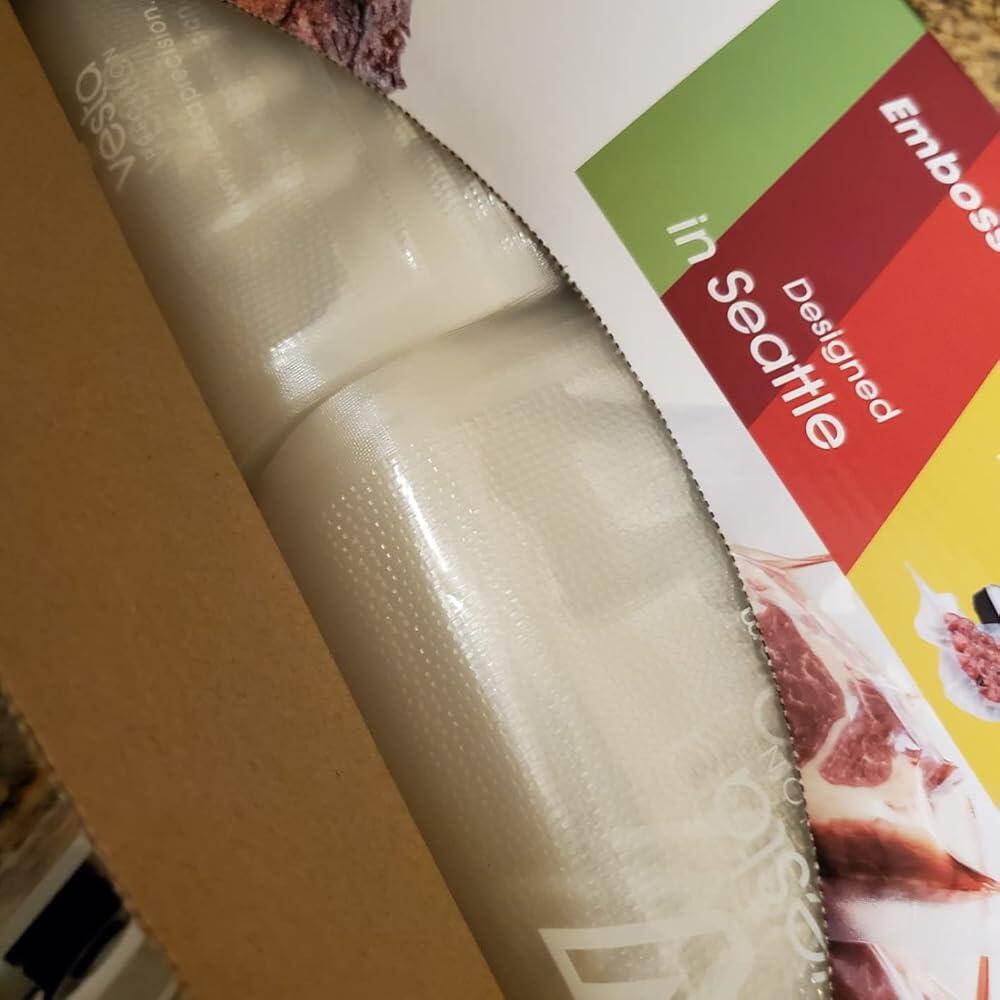
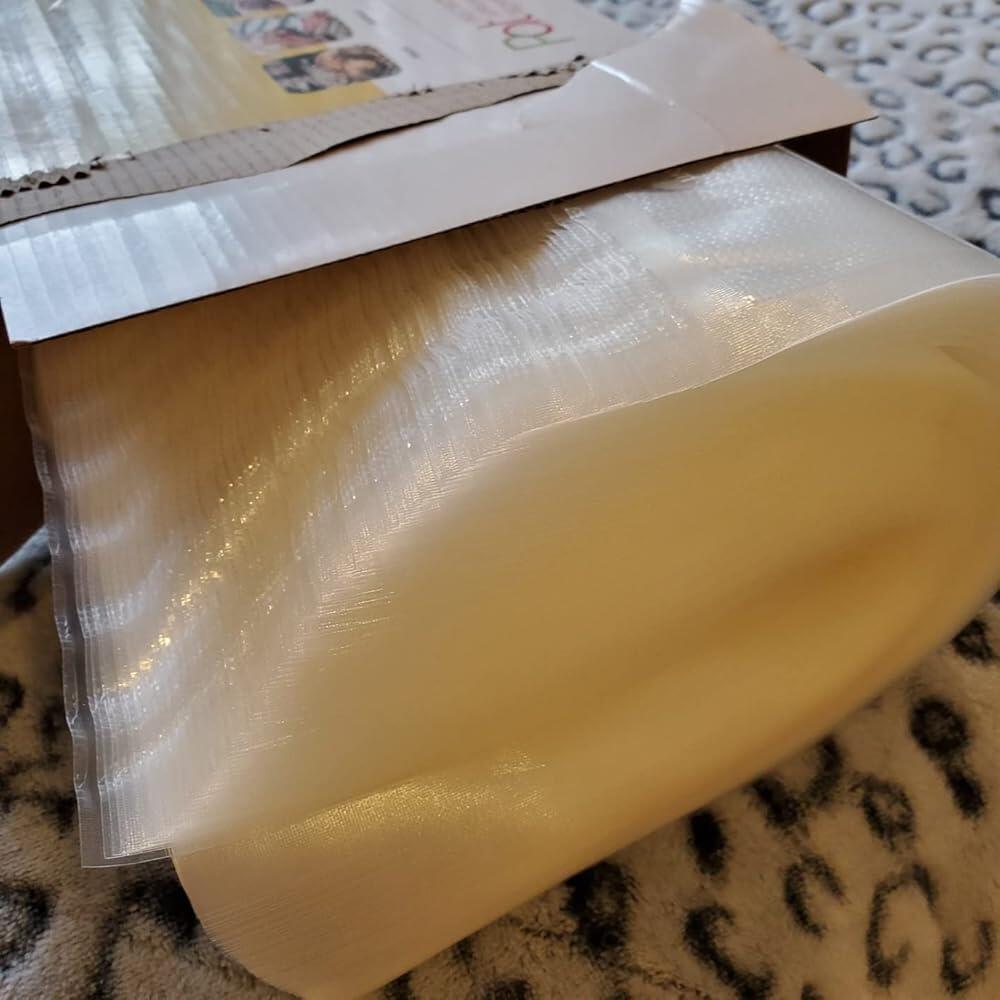
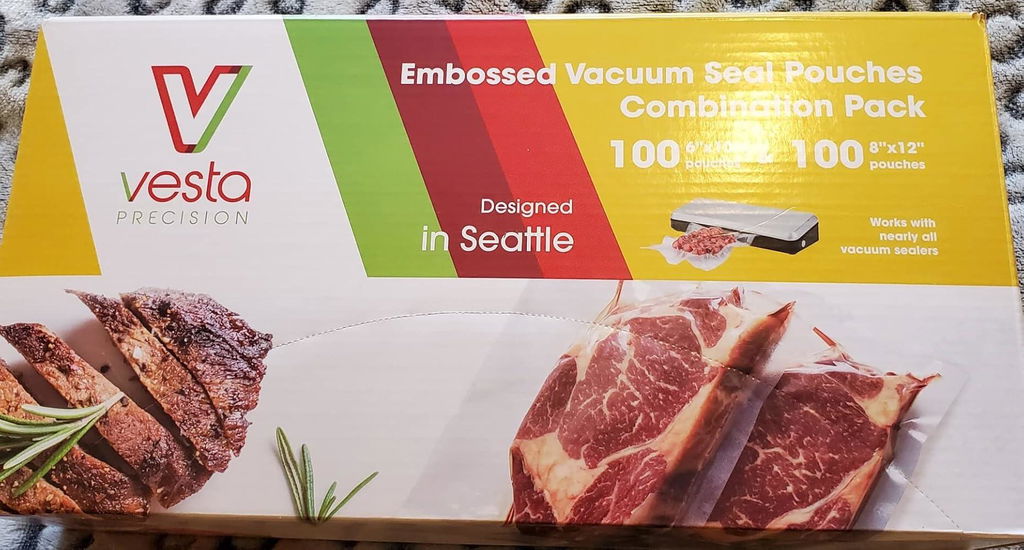
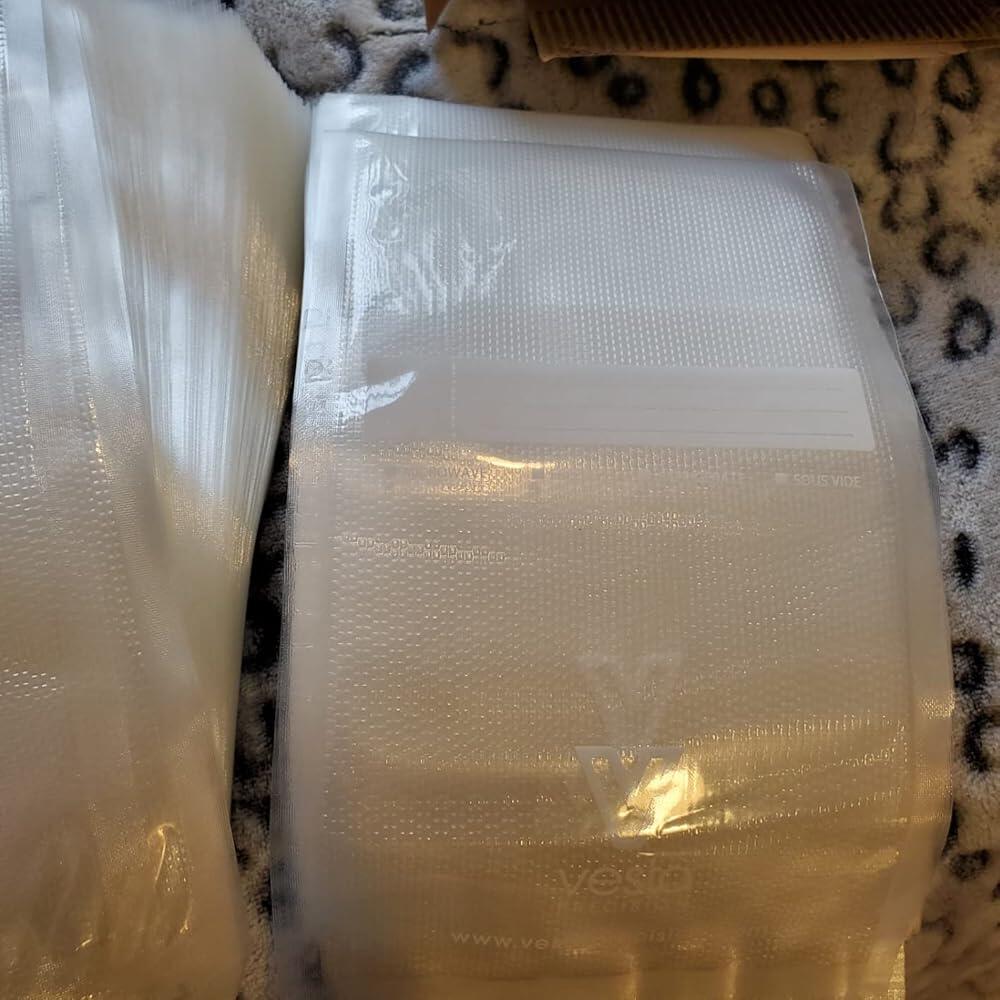
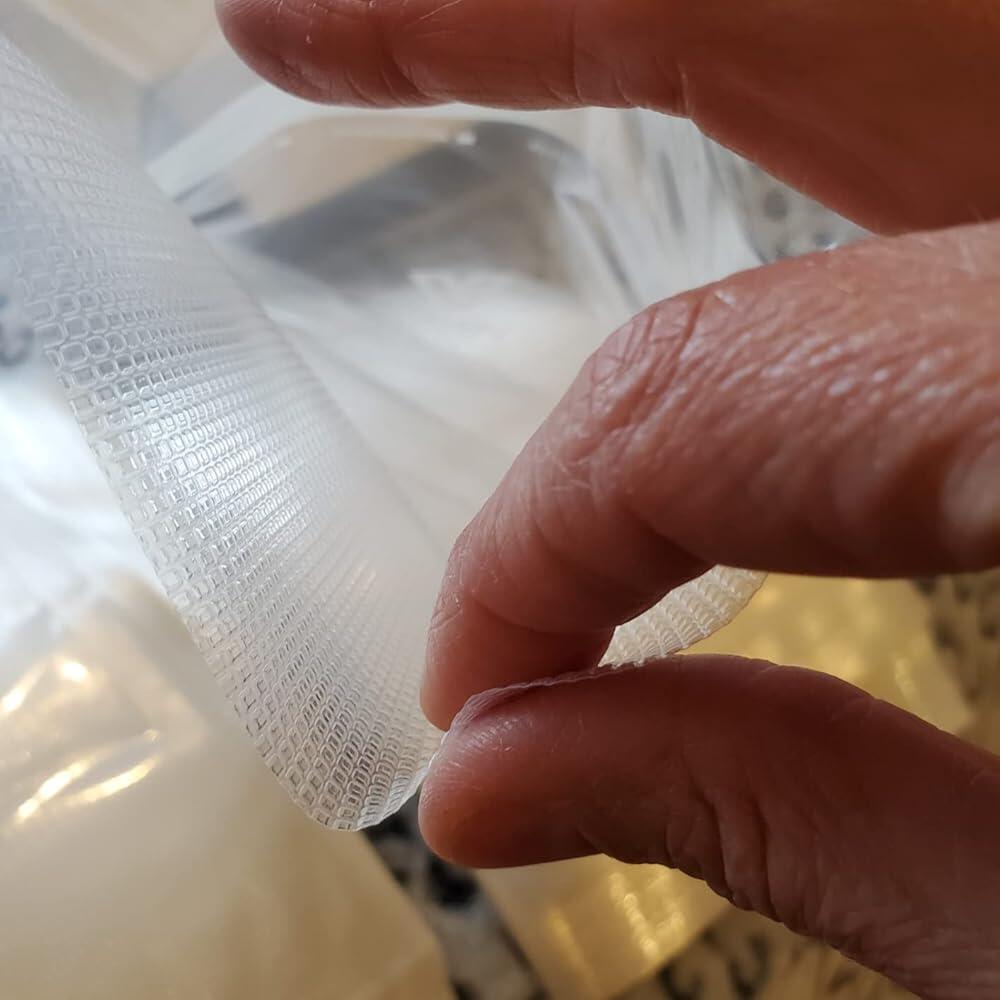
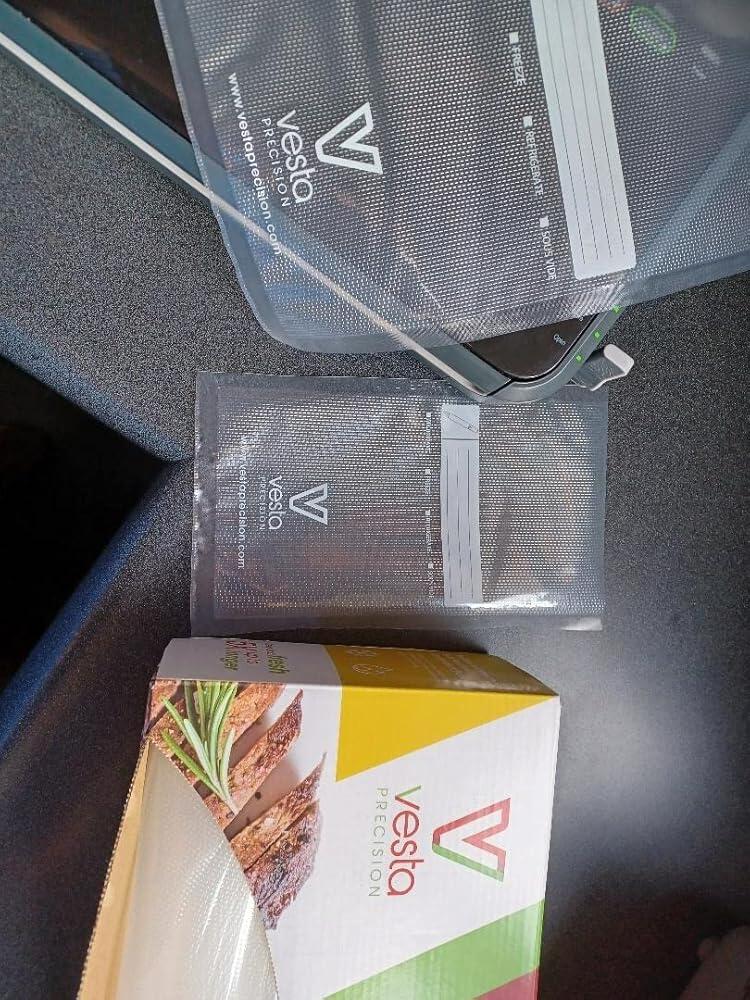
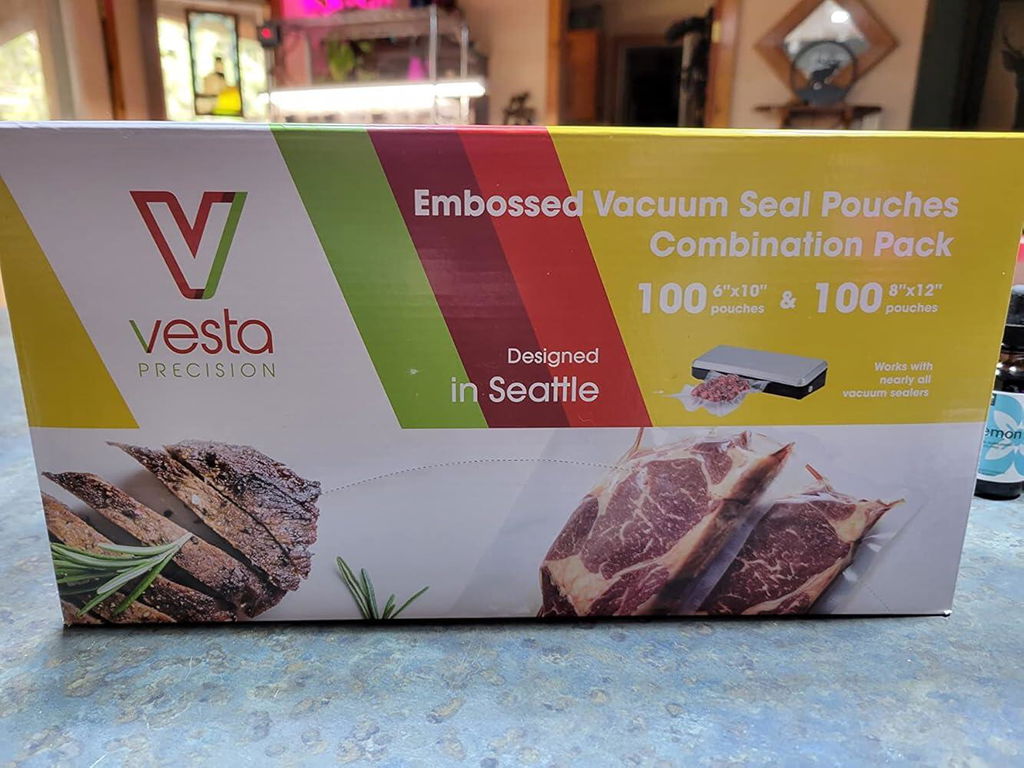
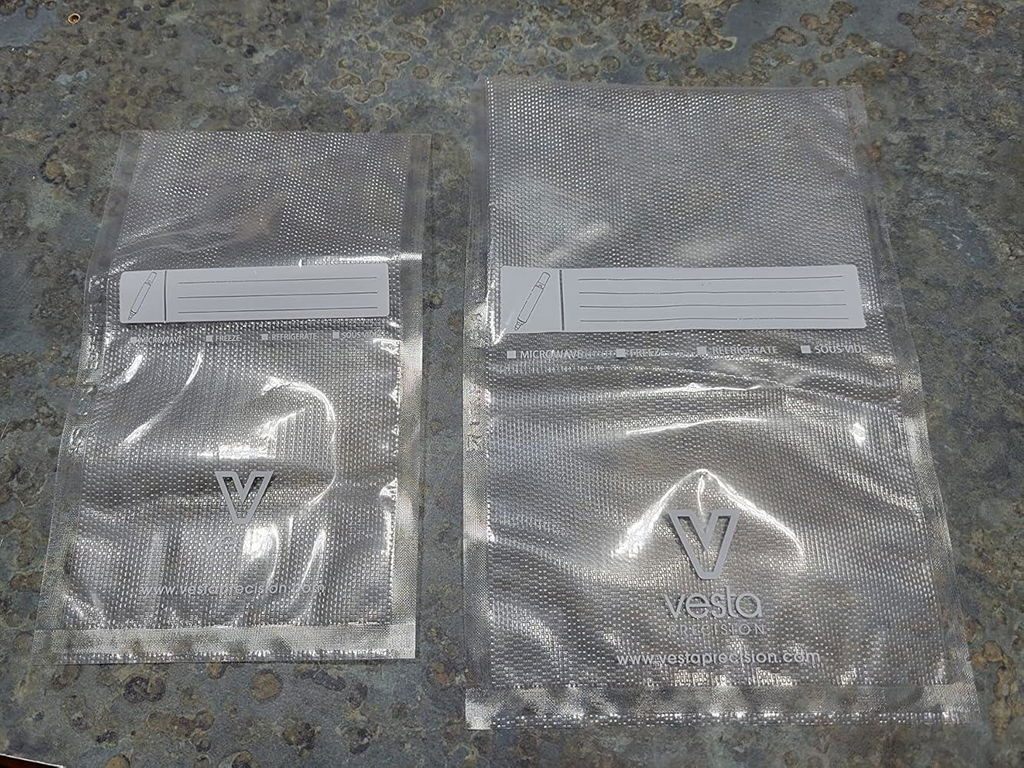
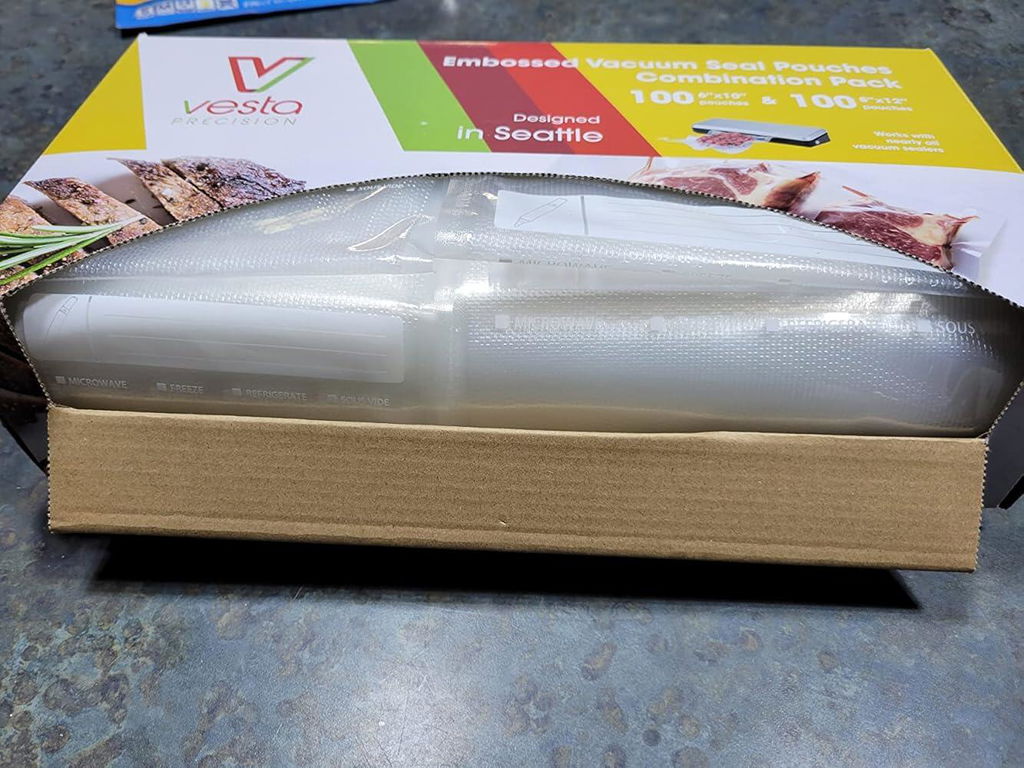
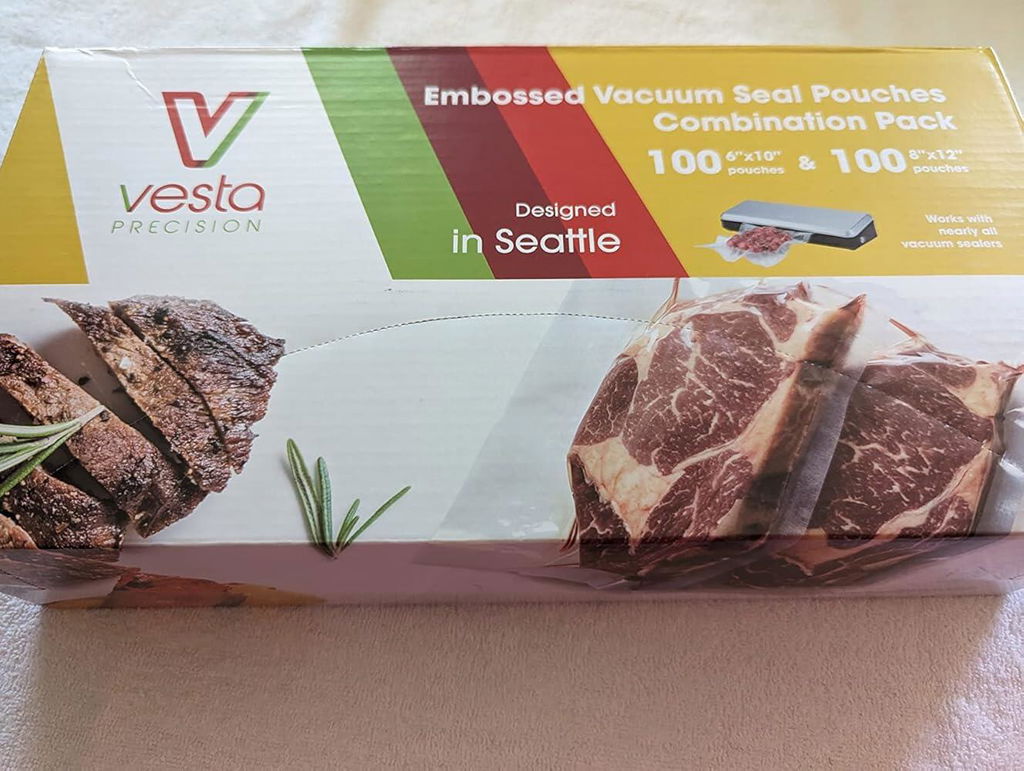
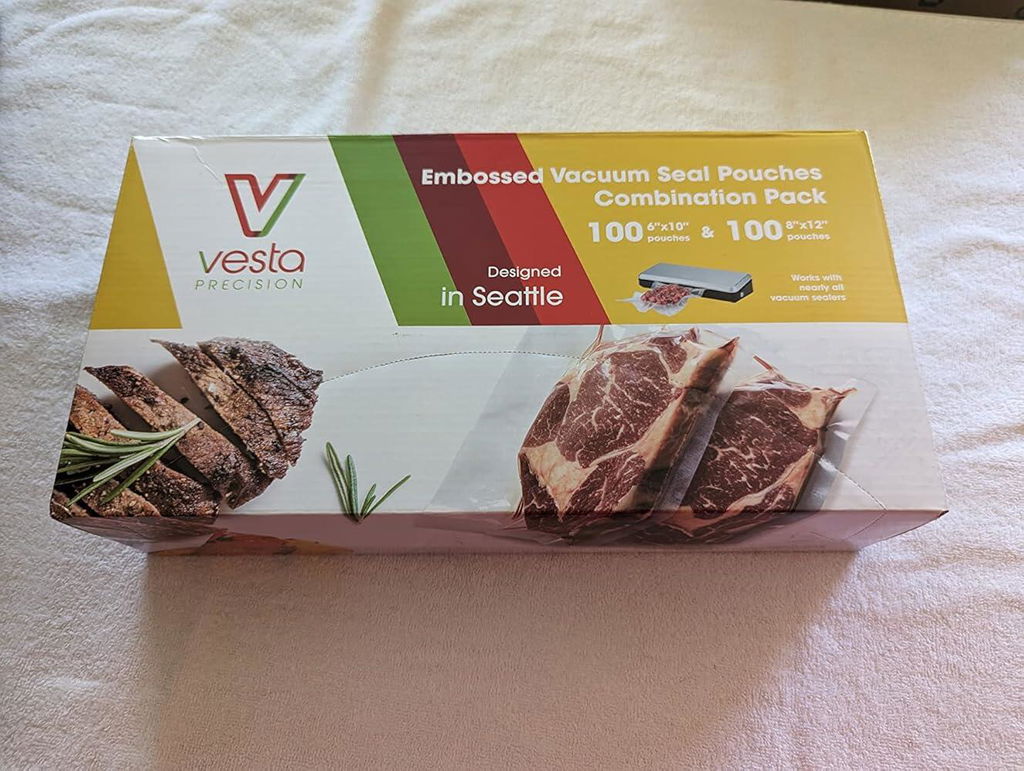
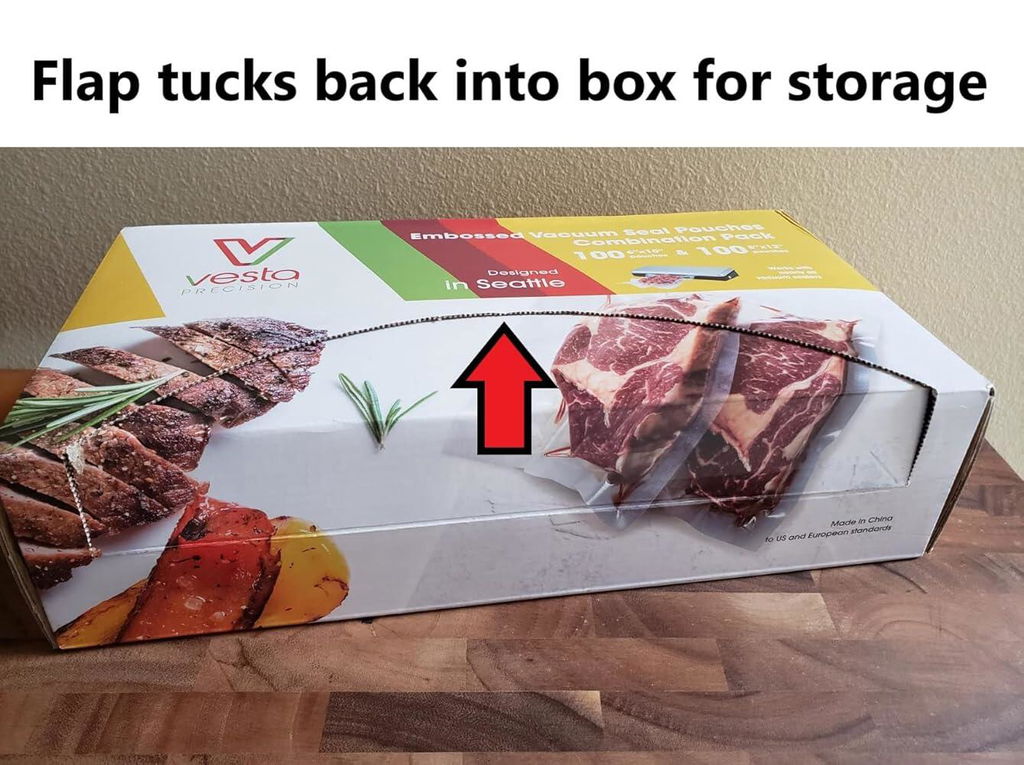
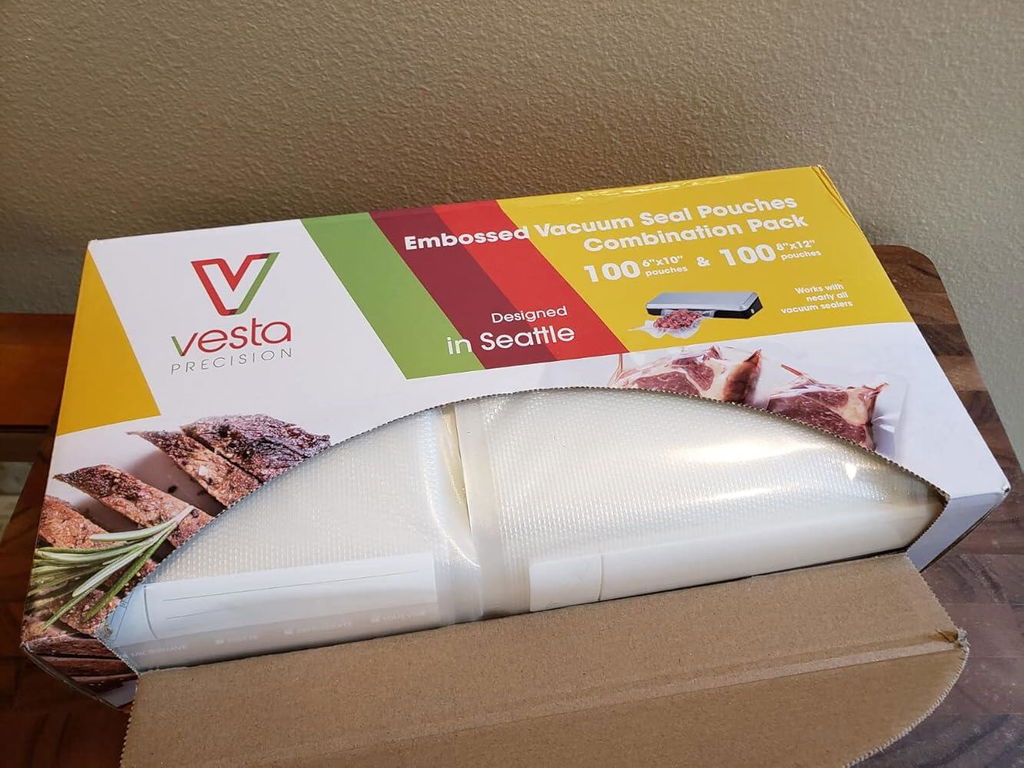
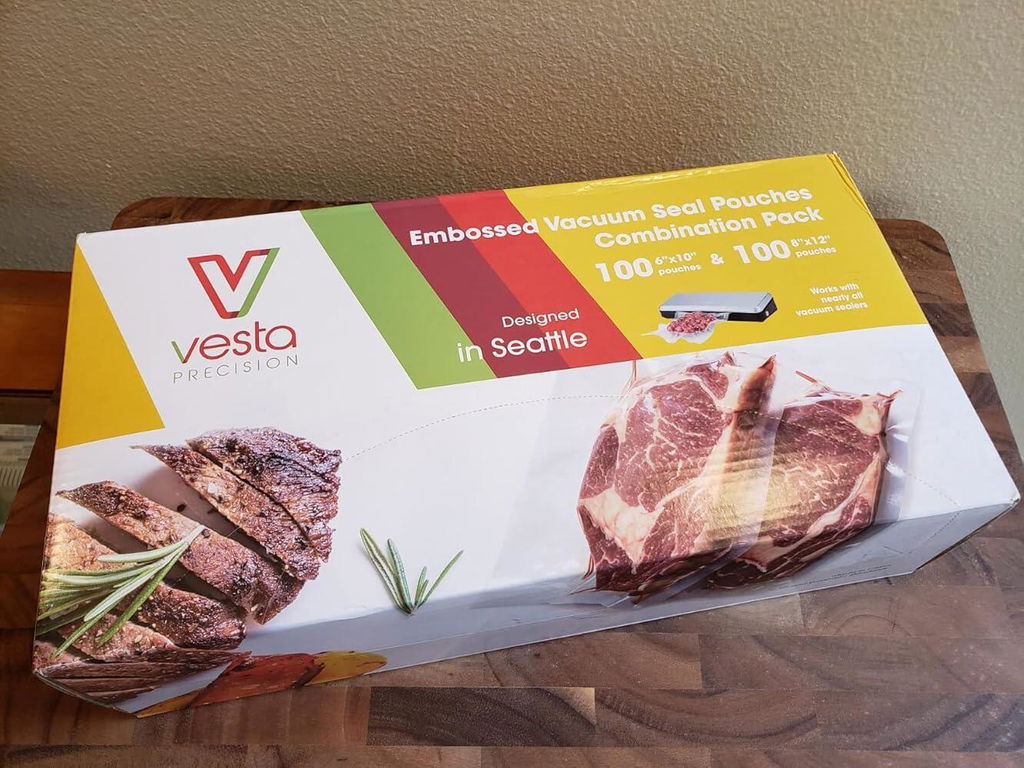
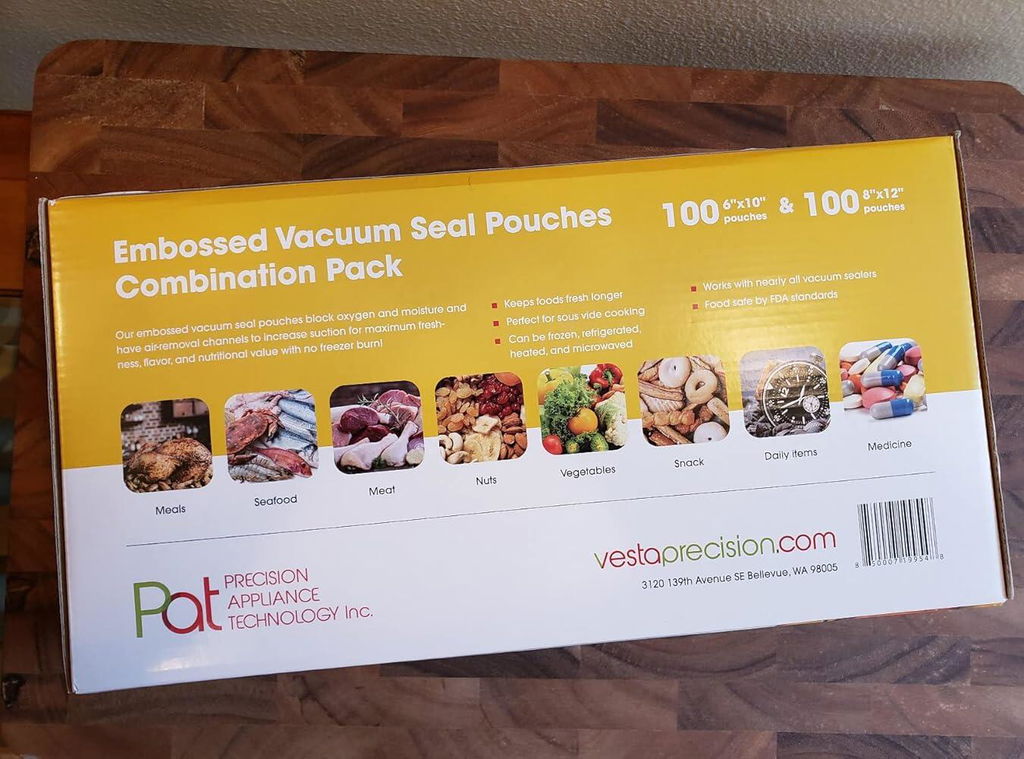
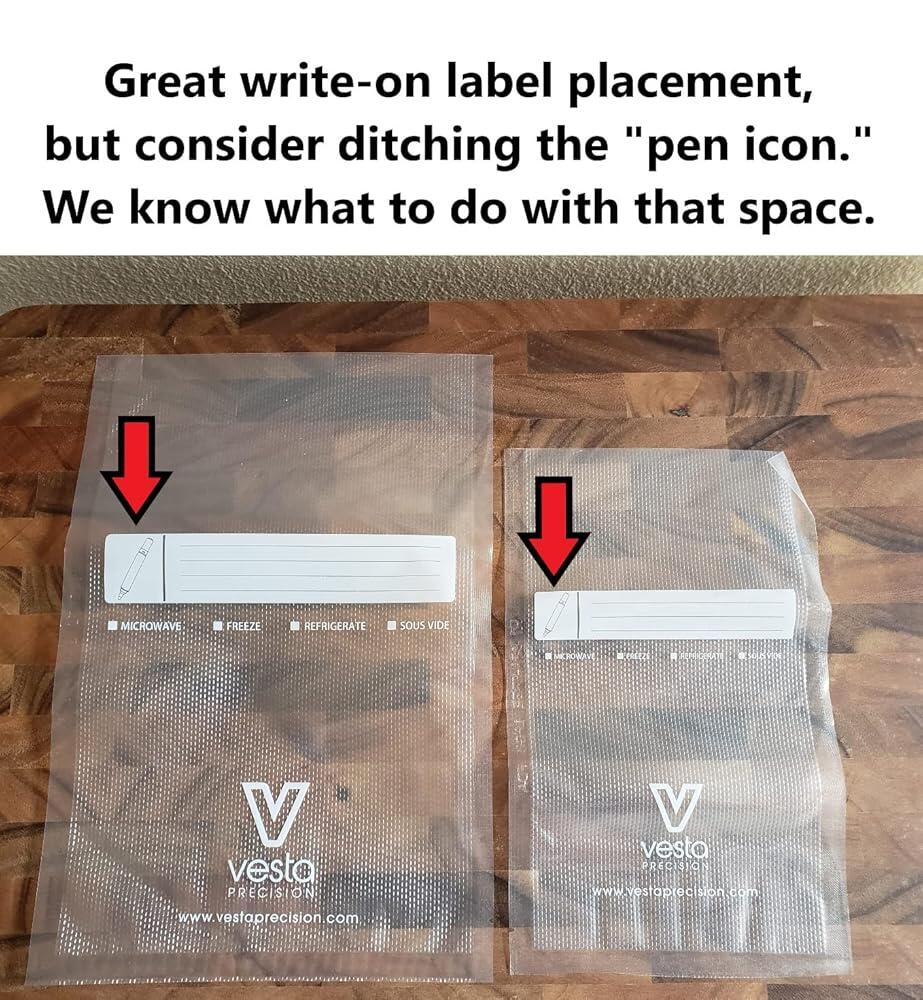
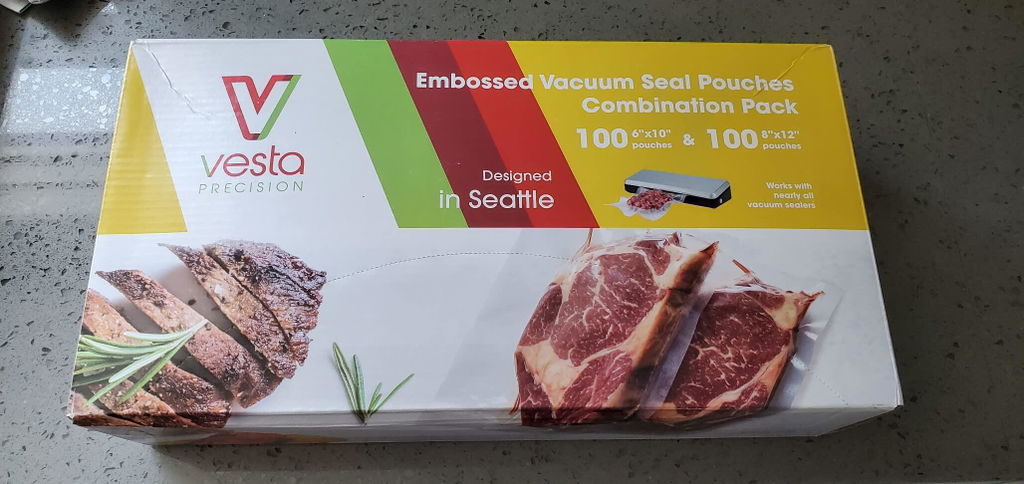
A lot of vacuum bags travel through my kitchen. They’re used for prolonging the life of frozen food, as well as for cooking sous vide. There are times when it’s necessary to custom-cut bags for certain items, so that’s when bag rolls are useful. But there are plenty of other times when regular, pre-cut bags are easiest to use – and these Vesta bags pass muster.SIZE: While the bags have pre-sealed edges that are fairly wide, the inside dimensions – the measurements that count – are *exactly* the same as the name brand bags. The smaller Vesta bags are consistent with typical pint bags while the larger ones are quart-size.Pre-cut pints are ideal for large pork loin chops, for several lamb chops, or individual portions of frozen vegetable. Larger quart size bags can hold multiple servings of vegetables or pork, or larger cuts of beef like NY steak. You won’t find these bags large enough for things like hunks of pork shoulder or brisket, but for the most common types of home kitchen tasks these two sizes are ideal.SEALING: The Vesta bags are smooth on the top surface with ridges on the bottom to facilitate evacuation of air. They use a straight, vertical embossed design that makes me think of stacked bricks. I was initially concerned that the channels might not have deep enough grooves to fully evacuate air from bags – or that the vertical (rather than diagonal) pattern might cause problems with liquid seep. Thankfully, neither issue has been a problem.The bags work well with both my FoodSaver and ANOVA vacuum sealers. Air is fully evacuated, and the bags have consistently sealed with a single application of heat. To be safe, I typically double-seal things that either need to be stored in the freezer for a long time or those that will undergo an extended sous vide cook. So far, there have been no failures of either the heat seals or the bag seams.STORAGE: While the Vesta storage box is large and kind of bulky, I think it’s a better alternative than having the vacuum bags in a plastic sheath. For some reason, bags that are in a sheath tend to develop curling around the open edge, an issue that makes it awkward to fit that portion into a sealer. I haven’t encountered any problem with curling or misshapen bags since using these. The carton flap folds out for easy bag access, yet it easily tucks in to keep the bags corralled when not in use.One thing that does make me wonder is how “balanced” bag use will be over time. For someone who uses equal numbers of pint and quart-sized bags, the Vesta bags will get used up in about the same amount of time. But for someone who uses more pints than quarts – or vice versa – there will ultimately be the issue of having a lopsided number of bags.At that point does the user buy another large Vesta box holding 100 of each size? Or does the consumer feel pushed to switch to a brand that offers the option to buy only the bag size that needs to be replaced?*shrug* Only time will tell.VALUE: The current list price for these Vesta bags is about $24 for 200 – that’s 100 quarts and 100 pints. Looking at the current, average list price for the most common brand-name bags, it would cost almost $50 for 100 quarts and nearly $45 for 100 pints. That means you’d pay approximately $95 to get 200 of the name-brand bags, while the box of Vesta bags is roughly $24 for the same number.Translation? Brand-name bags cost about 4 times more than Vesta – but honestly, the quality is quite comparable.BOTTOM LINE: Vesta’s combo box of pre-cut pint- and quart-size vacuum sealer bags is an excellent value. The bags perform quite well in regard to air evacuation and heat sealing when compared to those sold by the most well-known brand-name company.